


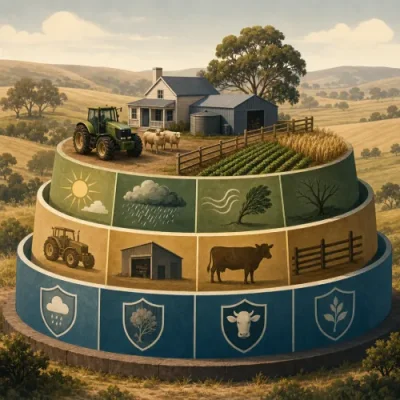
Farm insurance costs in Australia are not calculated from one simple price list. A quote usually reflects the insurer's view of the risks attached to your property, assets, farm activities, location, claims history and chosen policy settings. That is why two farms of similar size can receive different farm insurance premiums.
This article explains the main farm insurance quote factors that may affect the cost of cover, including insured values, enterprise type, natural hazard exposure, livestock, machinery, liability risks, excess options and coverage limits. It also outlines practical ways to review premiums while keeping protection aligned with your farm's needs. This is general information only and does not take your personal objectives, financial situation or needs into account.
Why farm insurance costs vary between farms
Farm insurance is often tailored because Australian farms differ widely. A small hobby farm with sheds, a few animals and limited public access has a different risk profile from a commercial mixed farm with employees, high-value machinery, livestock, cropping operations and visitors on site.
Insurers generally consider both the chance of a claim and the potential size of that claim. A quote may also be affected by the cover types selected, the policy limits, the excess, the insurer's appetite for certain risks and broader market conditions. For quote context and general farm insurance options, you can visit Farm Insurance Australia.
Main factors that can influence farm insurance cost in Australia
Farm location and natural hazard exposure
Location can be a major pricing factor. Insurers may consider whether the property is exposed to bushfire, flood, cyclone, storm, hail, drought-related impacts, isolation, access issues or other regional risks. A farm in a high bushfire exposure area, flood-prone catchment or cyclone-affected region may be assessed differently from a farm with lower natural hazard exposure.
Local emergency access, distance from fire services, water availability for firefighting, building materials and surrounding vegetation can also influence how risk is assessed. Policies may contain exclusions, sub-limits or specific conditions for weather-related risks, so it is important to read the wording carefully.
Farm size, layout and enterprise type
The physical size of the farm is relevant, but it is not the only consideration. Insurers may look at how the land is used, how spread out the assets are, and whether the operation is a hobby farm, commercial farm, mixed-use property, cropping enterprise, livestock operation, horticulture business, dairy, vineyard or another type of agricultural activity.
Enterprise type matters because different activities create different risks. For example, cropping can involve exposure to seasonal weather and harvested produce storage, while livestock operations may involve animal mortality risks, fencing, transport, biosecurity and handling facilities. Agritourism, farm stays, produce sales, workshops or public events can introduce additional liability considerations.
Value of buildings, infrastructure and contents
The higher the insured value of farm buildings, sheds, silos, yards, tanks, pumps, irrigation systems, fencing, workshops and contents, the greater the potential claim amount. This can influence the premium.
Accurate valuations matter. Over-insuring may mean paying for limits that exceed the realistic replacement or reinstatement need. Under-insuring may reduce the premium but can create serious problems if a claim is settled for less than the cost of repair or replacement, or if an underinsurance clause applies. Regularly reviewing insured values can help keep cover aligned with the actual farm asset base.
Machinery, vehicles and mobile plant
Tractors, harvesters, headers, sprayers, utes, trailers, quad bikes, side-by-sides, generators and other equipment can represent a significant portion of a farm's insured value. The age, condition, replacement cost, security, maintenance history, use and storage of machinery may all affect quote outcomes.
Specialised or imported machinery may need particular attention because repair times, parts availability and replacement costs can differ from standard equipment. If the farm relies heavily on a small number of key machines, it may also be worth considering whether interruption or downtime risks are addressed in the policy.
Livestock numbers and type
Livestock insurance costs can be affected by the number, type, breed, value and use of animals. Stud animals, high-value breeding stock, dairy herds, working dogs and commercial herds may have different insurance considerations.
Insurers may also consider disease exposure, animal handling practices, fencing quality, transport arrangements, shelter, water supply and records. For farmers with significant livestock exposure, policy wording should be checked for covered events, exclusions, waiting periods, valuation methods and notification requirements.
Crops, produce and seasonal stock
Crop-related cover may be influenced by crop type, area planted, growing region, expected yield, seasonal conditions, storage arrangements and the specific perils insured. Produce held in storage may also need to be considered separately from growing crops.
Because crop insurance can vary significantly by policy type, farmers should check whether cover is based on named events, specified perils, broader crop protection or another structure. Premiums and claim outcomes depend on the policy wording and insurer criteria.
Public liability and business activity exposure
Liability exposure can influence the cost of farm insurance, particularly where the farm has employees, contractors, delivery drivers, customers, visitors, neighbouring properties or public-facing activities. Examples may include farm gate sales, school visits, agritourism, horse agistment, workshops, events or accommodation.
Higher public interaction can increase the chance of injury or property damage claims. The selected liability limit, business activities declared to the insurer and risk controls on site may all affect the quote.
Claims history and loss experience
Your farm's claims history may affect premiums. A history of frequent claims, large losses or recurring issues can lead an insurer to price the risk differently, apply terms or decline certain cover. A limited or low claims history may be viewed more favourably, although it does not guarantee lower premiums or acceptance.
When discussing claims history, accuracy matters. Non-disclosure or incomplete information can create problems later, especially if a claim arises. If a previous issue has been addressed through repairs, safety upgrades or changed procedures, it may be useful to explain those improvements when seeking quotes.
Security, maintenance and risk management
Insurers may consider whether a farm has practical risk controls in place. These can include locked sheds, monitored security, fuel storage controls, firebreaks, machinery maintenance records, electrical inspections, water points, emergency plans, fencing maintenance, staff training and chemical storage procedures.
Risk management does not guarantee a lower premium, but it can help insurers understand the farm more accurately. It may also reduce the likelihood or severity of claims, which is valuable regardless of the premium outcome.
Coverage limits, optional covers and exclusions
The cost of farm insurance will usually increase as the level and breadth of cover increases. A policy with higher limits, more insured assets and additional covers will generally cost more than a policy with narrower protection, although the exact outcome depends on the insurer and circumstances.
Optional covers may include items such as machinery breakdown, business interruption, livestock, crop cover, theft, accidental damage, transit, fencing, hay or produce, environmental liability or specialist equipment. Exclusions and sub-limits are just as important as the headline premium. A cheaper quote may provide less cover or impose tighter conditions.
Excess settings
The excess is the amount you contribute towards a claim before the insurer pays the covered balance, subject to the policy terms. Choosing a higher farm insurance excess may reduce the premium because you are retaining more of the risk yourself. Choosing a lower excess may increase the premium but reduce your out-of-pocket amount if you need to claim.
The right excess depends on the farm's cash flow, emergency reserves and willingness to absorb smaller losses. A higher excess should be affordable if a claim occurs; otherwise, the short-term premium reduction may create financial pressure later.
Insurer appetite and policy structure
Not every insurer prices farm risks the same way. Some may have more experience with certain farm types, locations or asset classes. Others may limit cover for particular exposures or apply different underwriting criteria. This is why comparing farm insurance quotes is not just about finding a lower price; it is about understanding how each policy responds to your specific operation.
Quick guide to common quote factors
| Quote factor | Why it may affect the premium | Question to ask |
|---|---|---|
| Location | Natural hazards, access and regional claim patterns may change the insurer's view of risk. | Are bushfire, flood, storm or cyclone risks covered, limited or excluded? |
| Insured values | Higher building, machinery, livestock or crop values can increase the potential claim amount. | Are the sums insured current and realistic? |
| Farm activities | Different enterprises create different property, liability and income risks. | Have all farm and side-business activities been declared? |
| Claims history | Past claims can influence pricing, terms or acceptance. | Can you show what has changed since any previous losses? |
| Excess | A higher excess may reduce premiums but increases out-of-pocket costs at claim time. | Could the farm comfortably pay the excess after a loss? |
| Coverage limits | Higher limits and broader optional covers usually increase cost. | Do the limits match the farm's real exposure? |
| Risk controls | Maintenance, security and safety measures may help demonstrate lower risk. | Can you provide records, photos or evidence of risk management? |
How to review your current farm insurance coverage
A useful premium review starts with understanding what your current policy covers. Different farm insurance policies can vary in how they treat buildings, machinery, livestock, crops, liability, fencing, produce, vehicles, business interruption and specialist activities.
Begin by creating or updating an asset inventory. Include buildings, sheds, plant, machinery, vehicles, livestock, stored produce, fencing, irrigation infrastructure, tools, technology and any high-value items. Then compare that inventory with the policy schedule and wording.
Regular reviews are important because farm operations change. New machinery, changes in livestock numbers, expanded cropping, leased land, diversification, ag-tech, farm stays or new employees may all alter the insurance need. A review after major purchases, seasonal changes or business changes can help reduce the risk of both over-insurance and under-insurance.
Ways to manage farm insurance premiums without creating gaps
Compare quotes on cover, not just price
Shopping around can help you understand how different insurers assess your farm, but the lowest premium is not always the most suitable option. Compare the premium alongside the excess, limits, exclusions, sub-limits, optional covers, claims process and insurer experience with agricultural risks.
If you are unsure how to compare policy wording, a specialist broker may help explain quote variables and policy differences. You can learn more about broker support through the farm insurance brokers page.
Adjust excess settings carefully
Increasing the excess can be one way to reduce farm insurance premiums, but it should be done cautiously. Consider how often smaller claims might occur, whether the business has sufficient cash reserves, and whether a higher excess would discourage useful claims after a genuine loss.
Some policies may have different excesses for different events, such as weather-related losses, machinery claims or liability claims. Review each one rather than focusing only on the standard excess.
Bundle cover where it makes sense
Some insurers may offer multi-policy or package options for farms that combine property, liability, machinery, vehicles and other covers. Bundling can sometimes simplify administration and may affect pricing, but it should still be compared against separate policies.
The key is to avoid overlaps and gaps. A bundled policy that leaves out an important risk may not be good value, even if the upfront premium appears attractive.
Keep strong maintenance and safety records
Good records can support both underwriting and claims. Maintenance logs, service records, electrical checks, chemical storage procedures, safety training, fire plans and machinery inspections may help demonstrate that risks are being actively managed.
These records can also be useful if a claim occurs, because they may help establish the condition and value of assets before the loss.
Improve security and loss prevention
Security measures such as locked sheds, key control, fuel storage protection, equipment tracking, lighting, fencing and restricted access may help reduce theft and damage risks. For fire and weather exposure, measures such as firebreak maintenance, vegetation management, water access, building upkeep and emergency planning can also be relevant.
Any premium effect depends on the insurer's criteria, but loss prevention has value beyond insurance pricing because it may reduce disruption to the farm.
Use technology and data where it supports risk management
Ag-tech tools such as farm management software, sensors, machinery telematics, weather monitoring, drone inspections or digital asset registers can help farmers understand and manage risks. Insurers may not always provide a direct discount, but accurate data can support more informed conversations about cover, values and risk controls.
For example, up-to-date asset records and maintenance history can make it easier to review sums insured and provide evidence after a loss.
Ask about available discounts or policy options
Depending on the insurer, discounts or alternative policy structures may be available for factors such as multiple policies, security measures, claims history or risk management. These are not guaranteed and may change over time, so ask what applies to your farm rather than assuming eligibility.
Government support, grants or disaster assistance programs may also change by state, region and event. Do not rely on them as a substitute for insurance, and check current eligibility requirements with the relevant authority before making decisions.
Understanding policy terms that affect cost
Insurance terms can have a major impact on both premium and claim outcomes. Important terms include premium, excess, sum insured, policy limit, sub-limit, exclusion, endorsement, replacement value, market value and underinsurance.
If any wording is unclear, ask the insurer or broker to explain it before accepting a quote. For a broader explanation of common policy language, see A Farmer's Guide to Essential Farm Insurance Terminology.
Questions to ask before accepting a farm insurance quote
- What assets, activities and locations are included in the quote?
- Are buildings, machinery, livestock, crops, fencing, produce and liability covered as expected?
- What are the policy limits, sub-limits and excesses?
- Are bushfire, flood, storm, cyclone, drought-related losses or other weather risks covered, restricted or excluded?
- Does the policy reflect current asset values and replacement costs?
- Are casual workers, contractors, visitors, farm gate sales or accommodation activities relevant to the policy?
- What information does the insurer need if the farm changes during the policy period?
- How does the claims process work, and what evidence would be needed?
- Are there risk improvements that may affect terms or premium at renewal?
- What is not covered?
When to review farm insurance costs
Annual renewal is a natural time to review farm insurance costs, but it should not be the only trigger. Consider reviewing cover when you buy or sell major machinery, change livestock numbers, plant different crops, build new sheds, lease additional land, introduce farm tourism, employ staff, add technology or experience a significant claim.
It is also worth reviewing cover after major changes in local hazard exposure, such as flood mapping updates, bushfire risk changes or infrastructure upgrades. The aim is not simply to reduce the premium, but to make sure the policy still reflects the farm's actual risk profile.
Balancing premium savings with protection
Reducing the cost of farm insurance can be important for farm profitability, but premium savings should be weighed against the financial impact of being underinsured or missing key cover. A lower premium may come with higher excesses, lower limits, narrower definitions or exclusions that matter at claim time.
A practical approach is to identify the losses the farm could absorb itself and the losses that would seriously affect operations. Insurance is generally most valuable for risks that could create major financial disruption. The right balance will depend on the farm's assets, income, cash flow, risk tolerance and insurer options.
Conclusion
Farm insurance cost in Australia is shaped by many factors, including location, natural hazard exposure, enterprise type, insured values, machinery, livestock, crops, liability risks, claims history, excess settings, coverage limits and policy structure. Because each farm is different, quote outcomes can vary even when policies appear similar at first glance.
Australian farmers can take practical steps to manage premiums by keeping accurate asset values, reviewing cover regularly, improving risk controls, comparing quotes carefully, asking about policy options and understanding the trade-offs between excess, limits and exclusions. The goal is not simply to find a cheaper policy, but to choose cover that reflects the farm's real risks and financial capacity.