


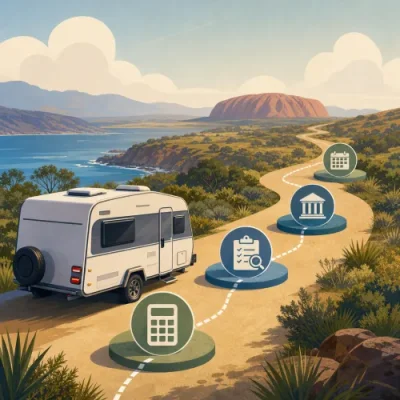
A caravan loan is a type of finance used to buy a new or used caravan, camper trailer or similar recreational vehicle. For many Australians, it can make caravan ownership more manageable by spreading the purchase cost over regular repayments instead of paying the full amount upfront.
How caravan loans work in Australia depends on the lender, the caravan, the borrower's financial position and the loan structure. Before applying, it is worth understanding the difference between secured and unsecured finance, how repayments are calculated, what lenders may assess and what costs can sit outside the advertised interest rate.
What is a caravan loan?
A caravan loan is an agreement between a borrower and a lender where the lender provides funds for a caravan purchase and the borrower repays the amount over an agreed term. Repayments usually include the amount borrowed, interest and any applicable fees or charges.
Caravan finance may be arranged for:
- new caravans bought from a dealer;
- used caravans bought from a dealer or private seller;
- camper trailers, pop-top caravans and some hybrid or off-road models;
- upgrades where the borrower is replacing an existing caravan.
The lender's willingness to finance a particular caravan can depend on factors such as its age, condition, value, registration status, seller type and whether the lender is comfortable using it as security.
How caravan finance works in Australia
At a basic level, caravan finance follows a straightforward process. You choose the caravan you want to buy, decide how much you may need to borrow, apply with a lender or through a broker, and then make repayments if the loan is approved and settled.
The details matter. A lender will usually assess both the caravan and the borrower. The caravan may need to meet the lender's asset criteria, while the borrower must show they can reasonably afford the repayments. Approval, interest rates, fees and available loan terms are not automatic and depend on individual circumstances and provider criteria.
If you are still comparing options, the Australian Caravan Loans homepage can be a starting point for understanding the types of caravan loan options available through the site.
Secured caravan loans versus unsecured caravan loans
One of the main decisions is whether the loan is secured or unsecured. The right option depends on the caravan being purchased, lender requirements and your financial situation.
| Loan type | How it generally works | Key considerations |
|---|---|---|
| Secured caravan loan | The caravan is used as security for the loan. If the borrower does not meet the loan obligations, the lender may have rights in relation to the secured asset. | May offer different rates or terms than unsecured finance, but the caravan must usually meet the lender's asset criteria. |
| Unsecured caravan loan | The loan is not directly secured against the caravan. The lender relies more heavily on the borrower's credit profile and ability to repay. | May be considered where the caravan is older or not eligible as security, but pricing and approval criteria can differ. |
A secured caravan loan is common when the caravan is newer, clearly valued and acceptable to the lender. Unsecured finance may be an option in some situations, but it can involve different interest rates, fees, loan limits or assessment standards.
What affects caravan loan repayments?
Caravan loan repayments are usually influenced by the amount borrowed, interest rate, loan term, repayment frequency and fees. A longer loan term may reduce each regular repayment, but it can also mean paying interest for longer. A shorter term may increase regular repayments but may reduce the total interest paid, depending on the loan structure.
Common repayment factors include:
- Loan amount: the purchase price less any deposit, trade-in or amount paid upfront.
- Interest rate: the rate applied to the loan, which may vary according to the borrower, lender, asset and loan type.
- Loan term: the length of time over which the loan is repaid.
- Fees: establishment, monthly, early repayment or other fees may apply depending on the lender.
- Repayment frequency: weekly, fortnightly or monthly repayments may be available, depending on the provider.
- Balloon or residual payment: some loan structures may include a larger final payment, which can reduce regular repayments but leaves an amount due at the end.
Before applying, it can help to estimate possible repayments under different loan amounts and terms. You can use the site's caravan loan calculators to explore repayment scenarios, but the results should be treated as estimates rather than a loan offer.
Do you need a deposit for a caravan loan?
Some borrowers contribute a deposit, while others may seek finance for most or all of the caravan purchase price. Whether a deposit is required depends on the lender, the caravan, the borrower's profile and the loan-to-value position.
A deposit may reduce the amount borrowed and may improve the overall structure of the application. However, having a deposit does not guarantee approval, and not having one does not automatically mean an application cannot be considered. Lenders will still look at affordability, credit history, employment, income, existing debts and the caravan itself.
What lenders may assess before approving a caravan loan
When assessing a caravan loan application, lenders usually consider whether the borrower can afford the repayments and whether the loan fits their lending criteria. The exact process varies between providers.
Assessment may include:
- Income and employment: your earnings, employment type, stability and supporting documents.
- Expenses: everyday living costs, rent or mortgage payments, dependants and other commitments.
- Existing debts: credit cards, personal loans, car loans, buy now pay later accounts and other liabilities.
- Credit history: repayment conduct, defaults, enquiries and overall credit profile.
- Loan purpose: whether the funds are being used for an eligible caravan purchase.
- Caravan details: make, model, age, condition, value, seller type and whether it can be used as security.
Borrowers should provide accurate information. Lenders and brokers may request documents such as payslips, bank statements, identification, a tax return or business financials, depending on employment type and application details.
New caravan loans and used caravan finance
Caravan loans Australia-wide may be available for both new and used caravans, but the assessment can differ. A new caravan bought from a dealer may be easier for a lender to value and verify. Used caravan finance can still be available, but the lender may pay closer attention to age, condition, registration and sale documents.
For private sales, borrowers may need to provide additional details about the seller and the caravan. It is also sensible to complete your own checks, including confirming ownership, registration, identification numbers, service history and whether there is any finance owing on the caravan.
If you are still deciding what to buy, this guide on selecting the perfect caravan for your Australian adventure may help you think through size, towing capacity, layout and features before you commit to finance.
Fixed rates, variable rates and comparison considerations
Some caravan loans may have fixed interest rates, while others may have variable rates. A fixed rate generally provides more certainty about repayments during the fixed period. A variable rate may change over time, which can affect repayment amounts and total interest costs.
When comparing caravan finance, do not look only at the advertised rate. Consider the overall cost and flexibility of the loan, including:
- comparison rate, where available and relevant;
- upfront and ongoing fees;
- early repayment rules;
- whether extra repayments are allowed;
- loan term options;
- whether a balloon or residual payment applies;
- security requirements;
- what happens if you sell or upgrade the caravan before the loan ends.
The most suitable structure for one borrower may not suit another. A lower regular repayment can be appealing, but it may not always mean a lower total cost.
The role of caravan finance brokers
A finance broker can help borrowers understand available loan options and submit an application to a lender. Brokers may work with a panel of lenders and can help match an application to lender criteria, although they cannot guarantee approval, pricing or suitability.
A broker may assist with:
- explaining secured and unsecured loan options;
- identifying documents needed for an application;
- comparing loan structures from available lenders;
- submitting the application and liaising with the lender;
- helping borrowers understand conditional approval, settlement and next steps.
If you want to understand how broker support may fit into the process, you can visit the site's brokers page for more information.
Steps to apply for a caravan loan
The exact application process varies, but many borrowers follow a sequence like this:
- Set a realistic budget. Consider not only repayments, but also insurance, registration, maintenance, storage, towing equipment, servicing and travel costs.
- Check your credit and finances. Review your income, expenses and existing debts before applying.
- Choose the caravan or estimate the purchase price. You may be able to seek pre-approval before choosing the final caravan, depending on the lender.
- Compare loan structures. Look at secured versus unsecured finance, term length, fees and repayment flexibility.
- Prepare documents. Have identification, income evidence and caravan details ready where available.
- Submit an application. This may be done directly with a lender or through a broker.
- Review the loan offer carefully. Read the credit contract and ask questions before accepting.
- Settle the purchase. If approved, the lender may pay the dealer or seller directly, depending on the arrangement.
Pre-approval for caravan finance
Caravan loan pre-approval can give borrowers an indication of how much a lender may be prepared to lend, subject to conditions. It can be useful when shopping for a caravan because it helps set a working budget.
Pre-approval is not the same as unconditional approval. It may still depend on final verification, the chosen caravan, updated financial information and lender checks. Borrowers should avoid committing to a purchase until they understand any conditions attached to the finance.
Costs beyond the loan repayment
A caravan loan repayment is only one part of the ownership cost. Before applying, consider the broader budget. Depending on your situation, costs may include:
- caravan insurance;
- registration and transfer costs;
- servicing and repairs;
- tyres, brakes and safety checks;
- storage fees if you cannot keep the caravan at home;
- tow vehicle upgrades or towing equipment;
- annexes, solar, batteries or other accessories;
- holiday park fees and travel expenses.
Insurance is particularly important because a lender may require adequate cover for a secured asset. Policy availability, premiums and cover depend on the insurer and your circumstances.
Questions to ask before applying
Before choosing a caravan loan, it may help to ask:
- Can I afford the repayments if my income or expenses change?
- What is the total estimated cost over the full loan term?
- Are there upfront, ongoing or early exit fees?
- Is the loan secured against the caravan?
- Can I make extra repayments without penalty?
- Is there a balloon or residual payment at the end?
- What happens if I want to sell or upgrade the caravan?
- What documents will the lender need?
- Does the caravan meet the lender's age, condition and valuation requirements?
Key takeaway
A caravan loan can help finance a new or used caravan, but it is important to understand the structure before applying. The loan type, repayment amount, fees, term, security and lender criteria can all affect the cost and suitability of the finance.
Take time to compare options, estimate repayments and check the full cost of ownership. If you are unsure, consider seeking guidance from a licensed finance professional who can explain options in the context of your circumstances.