

If your business relies on a truck to earn income, buying one outright can tie up a large amount of working capital. A truck loan can help spread the cost of a new or used vehicle over an agreed term, with repayments structured around the loan amount, interest rate, fees and any balloon or residual arrangement.
This guide explains how truck loans work in Australia for business owners, owner-drivers and fleet operators. It covers the finance process, common loan structures, secured lending, repayment terms, settlement and key questions to ask before applying. It is general information only and does not take your business objectives, financial situation or needs into account.
What is a truck loan?
A truck loan is a finance arrangement used to purchase or refinance a truck for business purposes. In many cases, the truck itself is used as security for the loan, which means the lender has an interest in the vehicle until the finance is repaid or otherwise finalised.
Truck finance in Australia may be used for a range of commercial vehicles, including prime movers, rigid trucks, tippers, refrigerated trucks, concrete agitators, tow trucks and other vehicles used in transport, construction, agriculture or trade operations. Lender criteria can vary depending on the vehicle type, age, condition, intended use and the applicant's financial position.
For a broader starting point on available finance support, you can visit the Truck Loan Finance page.
How truck loans work in Australia
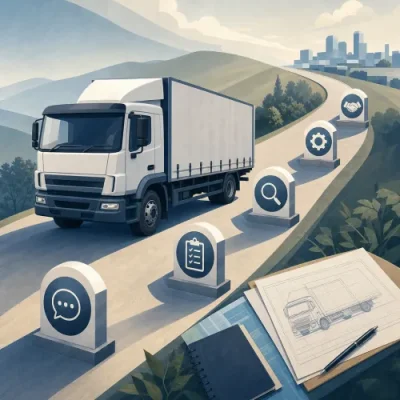
Although each lender has its own process, a commercial truck loan generally follows a sequence like this:
- You identify the truck and borrowing need. This may include the purchase price, deposit, on-road costs, fit-out, body equipment or refinancing amount.
- You provide business and financial information. The lender or broker assesses the business, income, cash flow, credit history and the truck being financed.
- The lender assesses risk and loan suitability. This may include checking serviceability, security value, industry exposure, time in business and repayment history.
- A finance offer is issued if approved. The offer may set out the loan amount, term, interest rate, fees, repayment frequency, balloon or residual amount and security conditions.
- Documents are signed and conditions are met. The lender may require insurance evidence, invoices, registration details or other settlement documents.
- Settlement occurs. Funds are usually paid to the dealer, seller or existing financier, depending on the transaction.
- You make repayments over the term. At the end of the term, the loan is paid out, refinanced or finalised according to its structure.
The exact timeline can vary. A straightforward dealer purchase with complete documentation may move faster than a private sale, older truck, complex business structure or application requiring additional checks.
Common truck loan structures
Different finance structures can affect ownership, accounting treatment, GST handling, end-of-term obligations and cash flow. The right structure depends on your business circumstances, so it can be worth speaking with your accountant or qualified adviser before signing.
| Finance structure | How it generally works | Common considerations |
|---|---|---|
| Secured commercial loan or chattel mortgage | The business borrows money to buy the truck, and the truck is commonly used as security for the loan. | Often used for business truck purchases. Repayments, ownership and tax treatment should be checked against your circumstances. |
| Finance lease | The lender or financier typically owns the truck during the lease, and the business uses it in exchange for lease payments. | There may be end-of-term options or obligations. Residual values and tax treatment need careful review. |
| Hire purchase or similar arrangement | The business uses the truck while paying instalments, with ownership usually transferring after final payment and conditions are met. | Availability and structure vary by provider. Check fees, ownership timing and early payout terms. |
| Operating lease or rental-style arrangement | The business pays to use the truck for a set period, often without the same ownership pathway as a purchase loan. | May suit some fleet strategies, but usage limits, return conditions and total cost should be reviewed. |
Not all structures are available from every lender, and names can be used differently across the market. Always read the contract terms rather than relying only on the product label.
Secured truck loans and lender security
Many commercial truck loans are secured. This means the lender takes a security interest in the truck, and the vehicle may be listed on the Personal Property Securities Register while the finance is active. If the borrower defaults and the issue is not resolved, the lender may have rights in relation to the secured asset under the loan contract and applicable law.
From a borrower's perspective, security can influence the lender's willingness to finance a vehicle, the amount available and the conditions attached. However, approval, pricing and loan terms still depend on the lender's assessment of the applicant, truck and transaction.
For private sales, lenders may require additional checks, such as confirming seller details, verifying there is no existing finance that will remain after settlement, and ensuring the truck can be properly transferred and registered. Older or specialised trucks may also require closer assessment.
What affects truck loan repayments?
Truck loan repayments are usually shaped by several moving parts:
- Loan amount: The purchase price less any deposit, trade-in or upfront contribution, plus any approved costs included in the finance.
- Interest rate: The rate offered by the lender, which can vary according to risk, security, credit profile, loan type and market conditions.
- Fees and charges: Establishment fees, monthly account fees, settlement costs, early payout costs or other charges may apply depending on the lender and contract.
- Loan term: A longer term may reduce regular repayment amounts but can increase total interest paid over time.
- Repayment frequency: Weekly, fortnightly or monthly repayments may suit different cash flow cycles.
- Balloon or residual amount: A larger amount left until the end of the term may lower regular repayments, but it creates a future payment or refinancing decision.
Before applying, it can help to model different repayment scenarios and consider how they fit with freight income, seasonal work, maintenance costs, fuel, registration, insurance, tyres and downtime. You can use the site's truck loan calculator as a starting point for estimating repayments, noting that calculator results are indicative only and not a loan offer.
Balloon payments and residual values
Some truck loans include a balloon payment or residual value. This is an amount due at the end of the loan or finance term. It can reduce regular repayments during the term, but the borrower still needs to deal with the final amount.
Common end-of-term options may include paying the balloon from business funds, selling or trading the truck, or refinancing the remaining amount if eligible. None of these outcomes is automatic. The truck's market value, business cash flow, lender criteria and broader market conditions can all affect what happens at the end of the term.
A balloon can be useful for cash flow planning in some circumstances, but it can also increase risk if the final amount is larger than expected resale value or if refinancing is not available on acceptable terms.
What lenders may look at
Lenders assess truck finance applications differently, but common factors include:
- Business trading history: Established businesses may have financial statements, tax returns, BAS and bank statements to support the application.
- ABN and business structure: The lender may review whether the applicant is a sole trader, partnership, company or trust, and who needs to provide guarantees.
- Cash flow and serviceability: The lender considers whether the business appears able to meet repayments alongside other operating costs and debts.
- Credit history: Personal and business credit files may be relevant, especially for directors, sole traders or guarantors.
- The truck being financed: Age, kilometres, condition, make, model, body type, intended use and resale value may affect assessment.
- Deposit or equity: Some transactions may require an upfront contribution, particularly where the truck is older, specialised or the applicant has limited trading history.
- Industry and contract position: Existing contracts, regular customers or freight work may help explain how the truck will generate revenue, but lenders will assess these details in their own way.
Applicants with limited documentation may still have options with some providers, but low-doc or alternative documentation finance is subject to lender criteria and may involve different rates, fees or conditions.
Documents commonly used in a truck finance application
The documents requested can depend on the lender, amount borrowed and application type. Common examples include:
- Australian Business Number and business details
- driver licence or identification for relevant applicants or guarantors
- recent business bank statements
- financial statements, tax returns or BAS where required
- vehicle invoice, quote or purchase contract
- details of the seller, especially for private sales
- information about existing debts or financed assets
- insurance details before settlement
- evidence of transport contracts or income, if relevant to the application
Providing complete and consistent information can reduce back-and-forth during assessment, but it does not guarantee approval or a particular rate.
New, used, dealer and private sale trucks
The type of truck purchase can change the way the loan is assessed and settled.
New trucks may come with clearer pricing, manufacturer information and dealer documentation, but they can also involve higher purchase prices and longer lead times in some markets.
Used trucks may have a lower upfront cost, but lenders may look more closely at age, kilometres, condition, service history and resale value. Maintenance and downtime risk should also be included in your cash flow planning.
Dealer purchases are often simpler to settle because invoices, registration and payment details are usually formalised. Private sales can still be financed by some lenders, but they may require additional verification and payout checks if there is existing finance on the truck.
If you are still deciding between vehicle types, the related guide New vs Used Truck Loans: What's the Smarter Financial Move? explores that decision in more detail.
How brokers can fit into the truck finance process
A truck finance broker may help compare lender options, explain documentation requirements and package the application for the type of truck and business involved. This can be useful where the purchase is time-sensitive, the business has multiple entities, the truck is specialised, or the applicant wants to understand how different repayment structures compare.
Using a broker does not guarantee approval, a lower rate or a particular outcome. Lenders still apply their own criteria, and broker fees, commissions or panel limitations should be understood before proceeding. You can learn more from the site's truck loan brokers page.
Ownership, registration and insurance
Ownership and control of the truck depend on the finance structure. Under some secured loan arrangements, the business may own the truck while the lender holds a security interest. Under some lease-style arrangements, the financier may own the truck during the term.
Registration and insurance requirements also matter. Lenders commonly require the truck to be comprehensively insured before settlement, with the financier's interest noted where applicable. The borrower should also consider business interruption exposure, goods-in-transit cover, public liability and other insurance needs relevant to the operation. Insurance availability, premiums and policy terms depend on insurer criteria and the applicant's circumstances.
Early payout, refinancing and upgrading
Transport businesses often upgrade trucks as contracts change, compliance needs evolve or maintenance costs rise. Before signing a truck loan, check how the contract deals with:
- early payout or break costs
- extra repayments
- refinancing during the term
- selling or trading the truck before the loan is paid out
- balloon payment treatment
- fees for releasing security after final payment
A loan that suits your business today may become restrictive if you need to replace the truck earlier than expected. Understanding exit costs and flexibility is particularly important for owner-drivers and fleet operators whose work can change quickly.
Key risks to consider before applying
A truck loan can support business growth, but it also creates ongoing obligations. Before applying, consider:
- Cash flow pressure: Repayments continue even if work slows, fuel costs rise or the truck is off the road.
- Asset depreciation: The truck may be worth less than the outstanding finance at some points during the term.
- Maintenance and compliance costs: Repairs, tyres, servicing, registration and roadworthiness obligations should be budgeted separately from loan repayments.
- Contract uncertainty: If a major freight or subcontracting arrangement ends, the loan still needs to be serviced.
- End-of-term exposure: A balloon or residual amount can create a significant future payment.
- Personal guarantees: Directors or business owners may be asked to provide guarantees, which can create personal financial risk.
Consider obtaining professional advice if you are unsure how a truck loan would affect your tax position, cash flow, balance sheet or personal obligations.
Questions to ask before choosing truck finance
Before committing to a truck loan, it may help to ask:
- What is the total amount repayable over the full term?
- Is the interest rate fixed or variable?
- What fees apply upfront, monthly, at settlement or on early payout?
- Is there a balloon or residual amount, and how realistic is the end-of-term plan?
- Who owns the truck during the finance term?
- What security is being taken over the truck or other assets?
- Are personal guarantees required?
- Can the loan be paid out early if the truck is sold or upgraded?
- What happens if the truck is written off, stolen or off the road for an extended period?
- Does the repayment schedule match expected business cash flow?
The bottom line
A truck loan in Australia generally works by financing the purchase of a business truck over a set term, often with the truck used as security. The borrower makes regular repayments, and the total cost depends on the loan amount, rate, fees, term, repayment structure and any balloon or residual amount.
The most suitable structure will depend on your business model, cash flow, tax position, vehicle choice and risk tolerance. Understanding how the finance process works before you apply can help you compare options more confidently and avoid focusing only on the regular repayment amount.